

Installation & Grout
This page covers installation and grout considerations for Tiles of Ezra tiles. It includes guidance on preparation, installation best practice, grout selection, and factors to consider for different applications and environments.
Q: What substrate conditions are required for installing your tiles?
For all Tiles of Ezra products, the substrate must be:
- Clean, dry, level, stable and structurally sound.
- Free of dust, grease, loose paint or other contaminants that hinder adhesion.
Dimensionally stable and non-deformable to support the weight of natural and handmade tiles.
For Natural Stone specifically, substrate must be compact and free of moisture issues.
Q: Which adhesives, mortars, or setting systems are compatible with your tiles?
Use a good quality tile adhesive or mortar suitable for the specific tile type and substrate—consult with a qualified installer or adhesive manufacturer for exact product choice.
For large format or uneven tiles, adhesives with good coverage and flexibility are recommended (discuss options with your tiler).
Reputable suppliers include: Ardex, Laticrete, Mapei, Kerakoll and more
Q: Do I need to seal the tiles or grout before or after installation?
Any unglazed tile (such as cement, terrazzo, natural stone, unglazed clay, etc.) should be sealed prior to installation. We recommend a water based, penetrating sealant.
A water-based penetrating sealant is designed to soak into the surface of natural stone and porous tiles, rather than sitting on top. This provides protection from within while maintaining the natural look and feel of the material.
Key benefits include:
- Stain resistance: Helps protect against common stains from water, oils, and everyday use
- Breathable protection: Allows moisture to escape from the tile, reducing the risk of trapped moisture or damage
- Maintains natural appearance: Does not form a surface film, so the tile retains its original texture and finish
- Low odour & safer application: Water-based formulas typically have lower VOCs, making them more suitable for indoor use
- Easy maintenance: Makes cleaning easier by reducing absorption of dirt and grime
Sealants can play an important role in the longevity and performance of natural and porous materials. However, the type of sealant, application method, and frequency should always be confirmed by your installer or sealing professional based on the specific tile and project conditions.
If you wish to seal your grout, do so in accordance with the grout and sealant manufacturer instructions.
Q: Is grout required or can I leave my tile ungrouted?
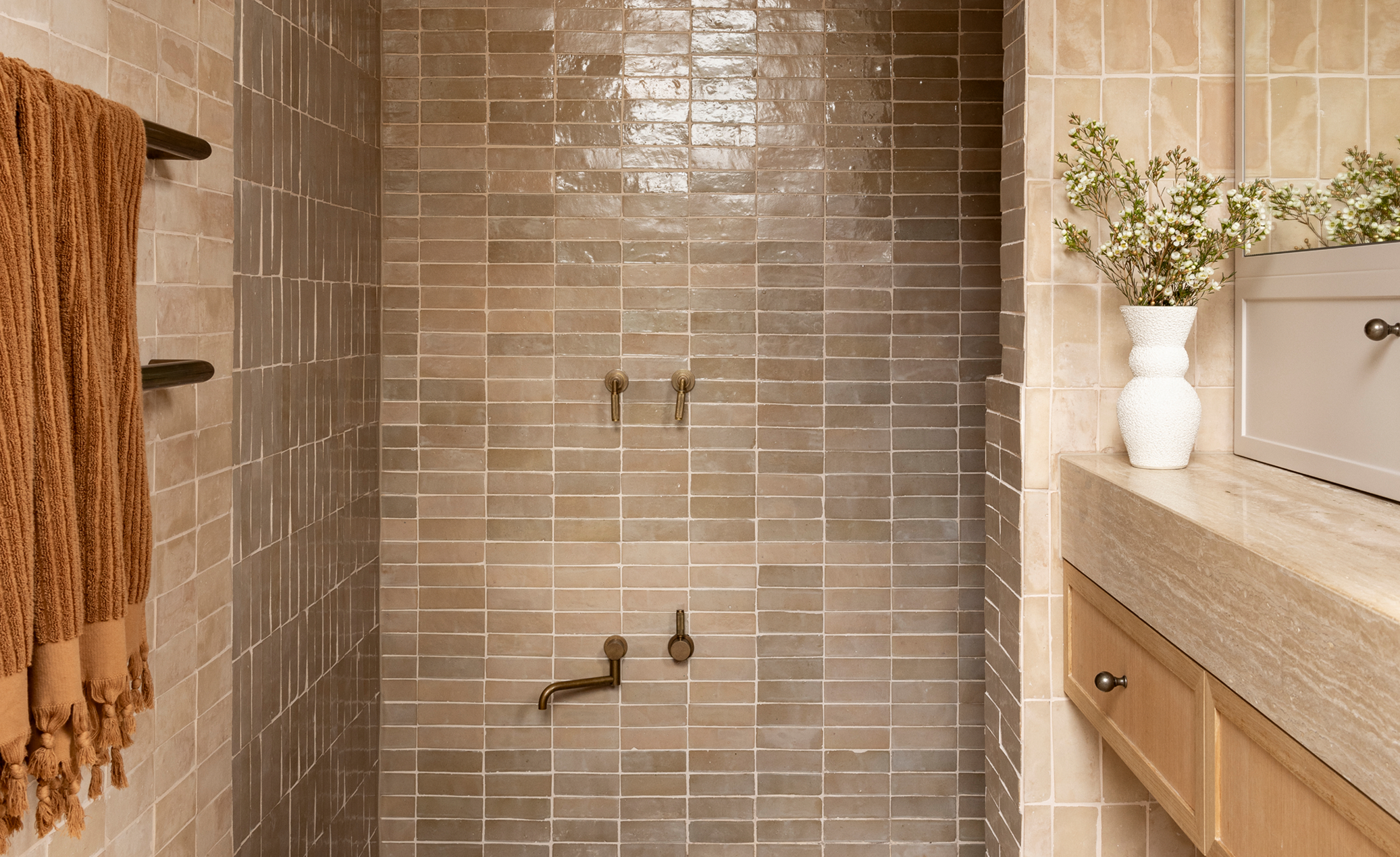
We do not recommend dry stacking zellige in any wet or dry application as grout is required to protect the edges of the tile over time. Grout is always recommended to complete the installation and secure the tiles.
Grouting is not only an aesthetic choice, it is an essential part of protecting your installation. Without grout, the gaps between tiles become exposed pathways where dust, debris, moisture and even insects can settle or pass through. Over time this can lead to hygiene issues, structural weakening, and damage behind the tiles.
Grout also plays a critical role in protecting the substrate by sealing the joints and preventing water penetration, which is especially important in kitchens, bathrooms, wet areas, and any environment exposed to humidity. Properly grouted joints help maintain the integrity of the installation, reduce movement between tiles, and ensure a longer-lasting, more durable finish.
The right grout colour and carefully considered spacing will allow the grout to visually recede so the tiles remain the hero. Speak with your sales representative for personalised recommendations.
Q: Do I need to seal the backs & sides of my tiles?
Sealing requirements can vary depending on the tile type, substrate, and installation method. In many cases—particularly with porous or natural materials—your installer may recommend sealing the backs and/or sides of tiles to manage moisture absorption and ensure proper adhesion.
Tiles of Ezra can provide general guidance on sealing and installation; however, we do not prescribe installation methods or site-specific requirements. It is the responsibility of your qualified installer or contractor to assess your project conditions and determine the appropriate sealing approach.
Tiles of Ezra accepts no responsibility for issues arising from installation methods, handling, or site conditions. All installation practices, including sealing, must be reviewed and confirmed by your professional installer prior to installation.
Q: What grout types (colour, size) do you recommend?
For handmade tiles, we feel that the tile shines with a grout spacing of no greater than 1-3mm (up to 1/8”) between tiles. This is however a personal and an aesthetic decision and we recommend consulting a professional contractor or project designer for your specific project needs before installation. For grout colour recommendations, please contact your sales representative.
Q: If I want to use large grout lines as a feature in my install are there any specific things I should know?
Larger grout lines (5 to 10 mm) can be an intentional design feature and create a striking, graphic look. However, with handmade tiles, it is important to understand how wider joints influence the overall aesthetic. Larger grout lines can soften or obscure some of the natural handmade characteristics, such as uneven edges and gentle undulation, and may visually emphasise the negative space between tiles, making the grout more prominent than the tiles themselves.
It’s also worth considering maintenance: wider joints have more exposed surface area and may require more frequent cleaning and ongoing care.
Q: Should I use tile spacers? What size?
Many of these handmade tiles vary slightly in size, and spacers are not always practical for installation. For Zellige, spacing can be minimal and some installers suggest laying by hand with minimal spacers for cohesion.
If you use spacers, choose sizes that align with your design vision, typically 1 to 3 mm for subtle spacing.
We do recommend the use of laser levels during installation to keep your tiling level vertically and horizontally, whilst allowing the handmade features like the uneven edges to shine.
Q: Should I be Sealing my grout lines?
While optional, sealing grout lines is wise. Because grout is naturally porous, applying (and periodically reapplying) a grout sealant helps protect the joints from liquid absorption, staining, and long-term discolouration.
Q: Should I be using Epoxy grout or Standard grout?
Standard cementitious grout is common for most residential applications.
Epoxy grout may be recommended for heavy moisture/wet areas or where high chemical resistance is needed.
Consult your installer for the right choice based on wet area exposure.
Q: Can your tiles be cut with standard tile cutters, wet saws, or special tools?
All tiles (including epoxy resin pre-assembled mosaics) can be cut using an angle grinder, diamond blade, or a wet saw. We recommend a wet saw for the least amount of tile dust. Consult our Working Safely with Tiles advice.
Q: Are there installation guides or instructions I can access?
Yes, each product page features the corresponding Installation Guide, Specification Sheet and other helpful documentation. You can find documentation for all products in our Resources here.
Q: Can I install the tiles myself?
We love a good DIY project—but when it comes to tiles, we strongly recommend engaging a qualified, experienced tiler.
Many of our tiles are handmade or natural, which means they require careful handling and specific installation techniques to achieve the intended finish. Small details—like substrate preparation, tile variation, sealing, and layout—can make a big difference to the final result.
A professional tiler will ensure the tiles are installed correctly and in line with best practice for your project. While we’re always happy to provide general guidance, all installation methods should be reviewed and confirmed by your installer, as Tiles of Ezra cannot take responsibility for issues arising from installation.
Q: Do you have recommended installers or a network of certified tilers?
Please contact your local sales representative for a referral.
Q: What tolerances in tile size variation should I expect?
As with all handmade products, expect natural variation in tile size, thickness and tone, this is part of the handmade aesthetic. Generally, we expect to see variances plus or minus 5 mm, although this can vary from batch to batch. This is a feature of handmade tile/natural stone and one of the elements that makes them look so beautiful when Installed
Q: Can I install mosaics, borders, or intricate patterns with your tile ranges?
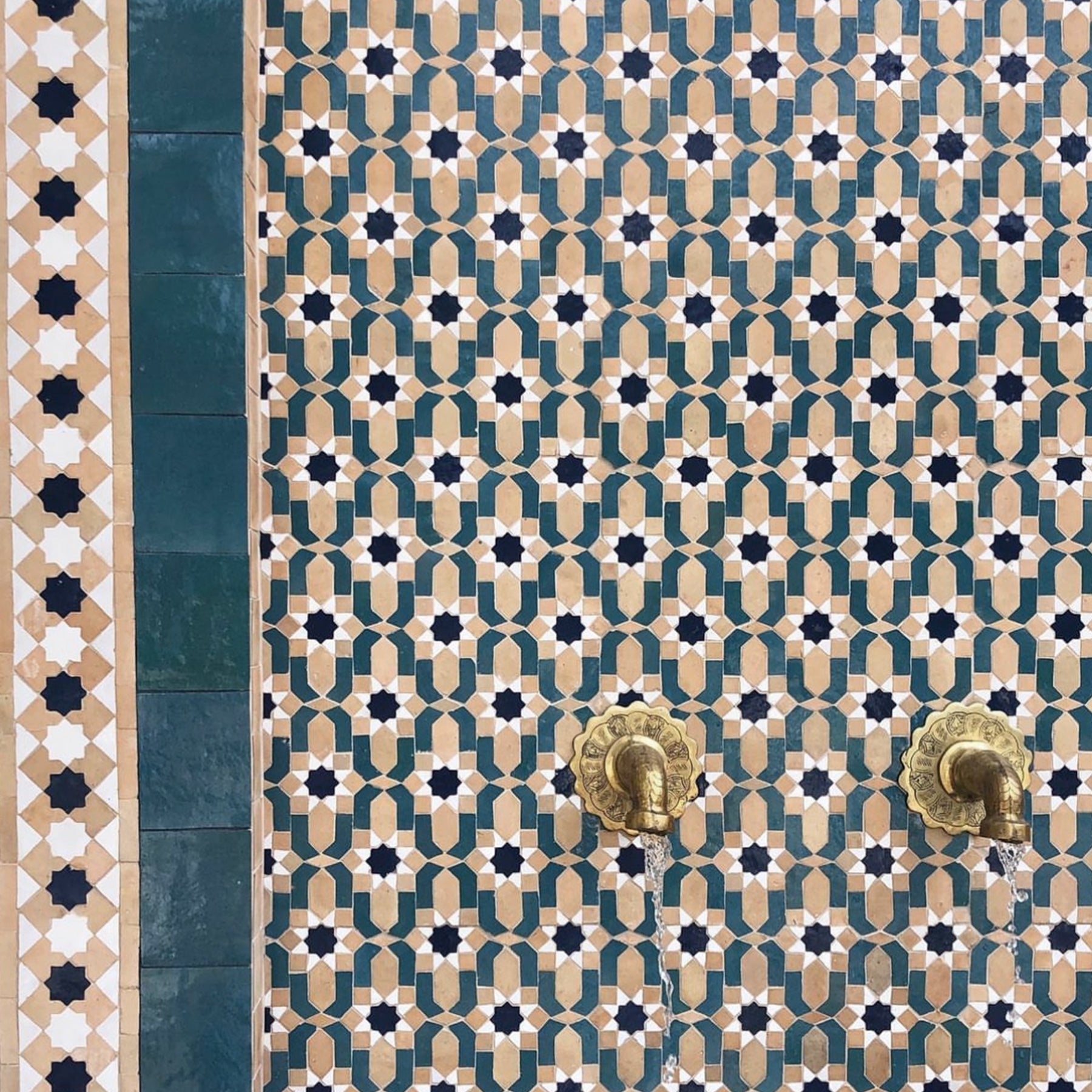
Yes. Zellige mosaics and borders are supplied on epoxy-backed sheets that fit together like puzzle pieces and can be cut to fit your layout.
Q: What expansion joints or movement joints are required?
Follow Australian Building Code and Standards for appropriate expansion and movement joints in floors and walls, especially where substrate movement is possible.
Q: How do I install tiles in wet areas (showers, bathrooms) with waterproofing considerations?
Please consult with a qualified installer.
Q: Where do I access the Tilesofezra Safety Data Sheets?
Safety Data Sheets can be located in our Resources here


Still Have Questions?
We’re here to help you navigate the details. Whether you’re exploring our ranges, comparing finishes, or seeking guidance on which tile best suits your space, our team is here to share the knowledge and confidence you need to decide.