
WHAT IS REAL ZELLIGE
Authentic Zellige Vs Imitation
How to Tell Authentic Zellige from Imitation, and Why It Matters

Tiles of Ezra Authentic Moroccan Zellige
The word zellige is being borrowed. Here's what it actually means, and how to know what you're buying.
Let's Clear Something Up
There is a lot of tile on the market that is sold as zellige.... But it isnt.
Over the last decade, the word "Zellige" has been borrowed by mass producers and applied to machine-pressed ceramic tiles with a printed glaze and a perfect, mechanically straight edge. While they may meet the mark for a handmade looking tile, they carry none of the craft, none of the variation, and none of the soul of authentic Moroccan zellige. And increasingly, they are being sold at similar price points to the real thing - without disclosure.
We think you deserve to know the difference.
What Zellige Actually Is
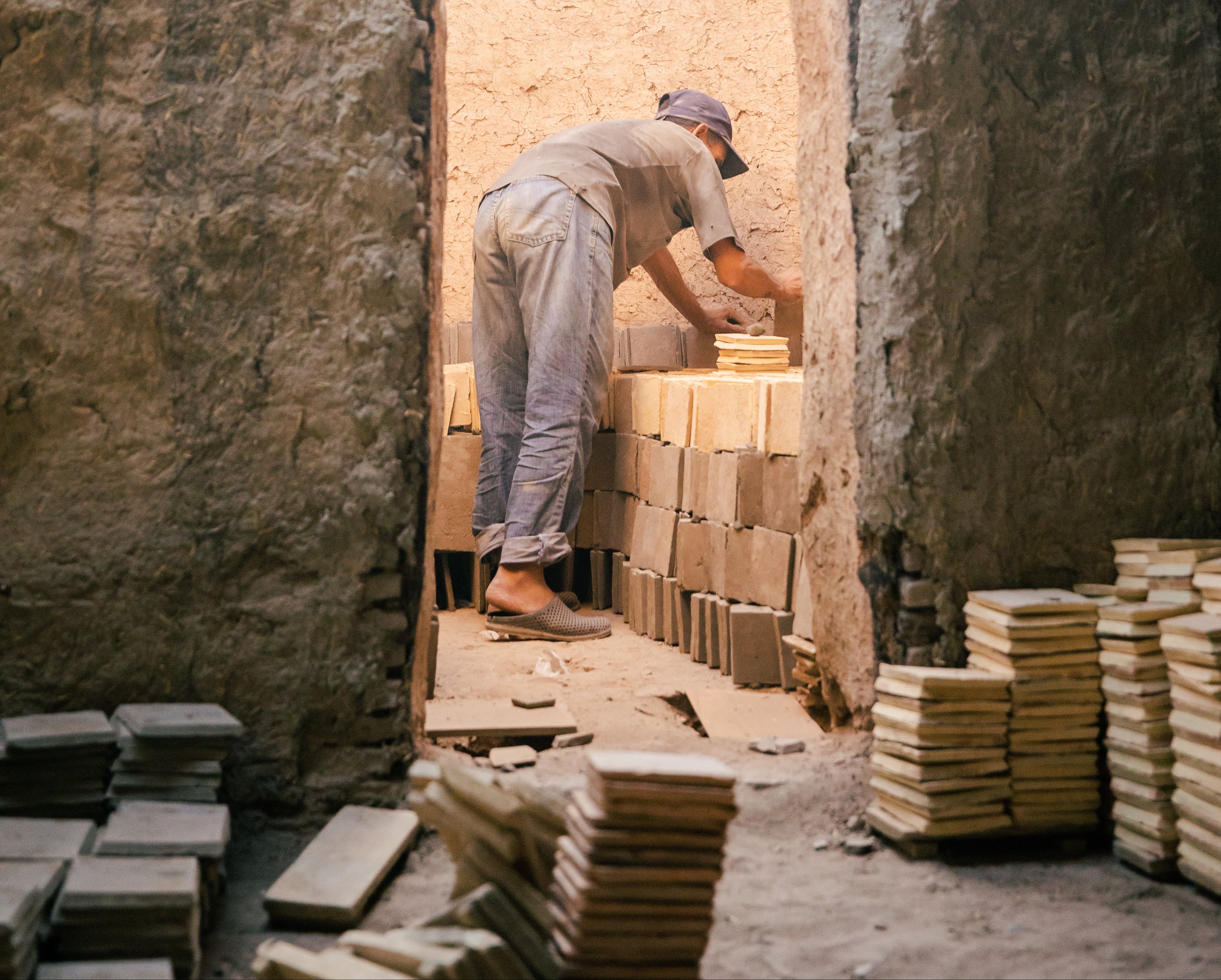
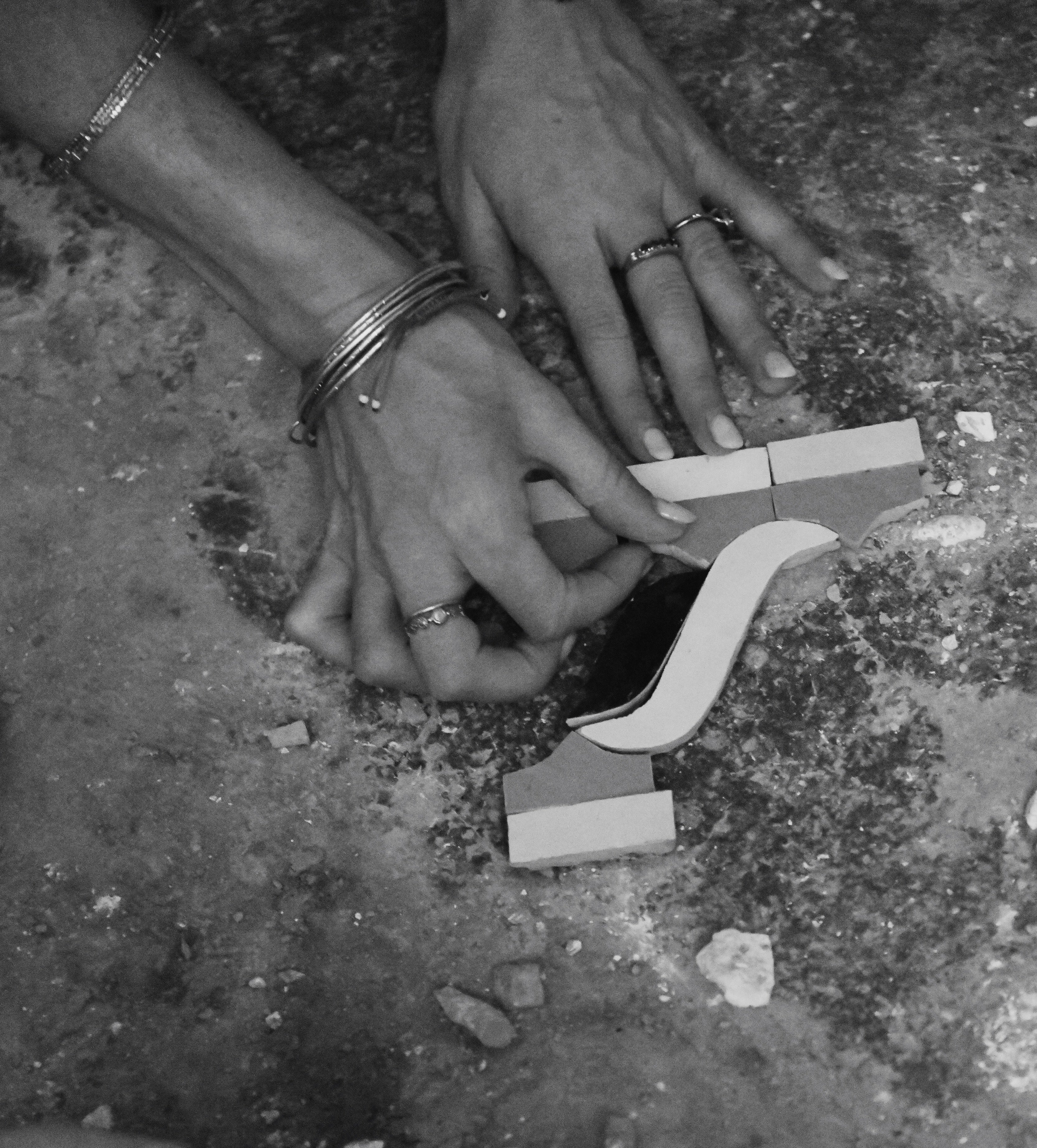
Authentic zellige is a hand-cut, hand-glazed, kiln-fired terracotta tile made by master craftsmen, mâalems, in Fez, Morocco. The tradition is over a thousand years old. The process has not changed in any meaningful way. Clay is formed by hand, glazed by hand, fired in traditional kilns, and then hand-cut into shape using a small iron hammer and a chisel. Every edge is irregular. Every surface is alive. No two tiles are the same.
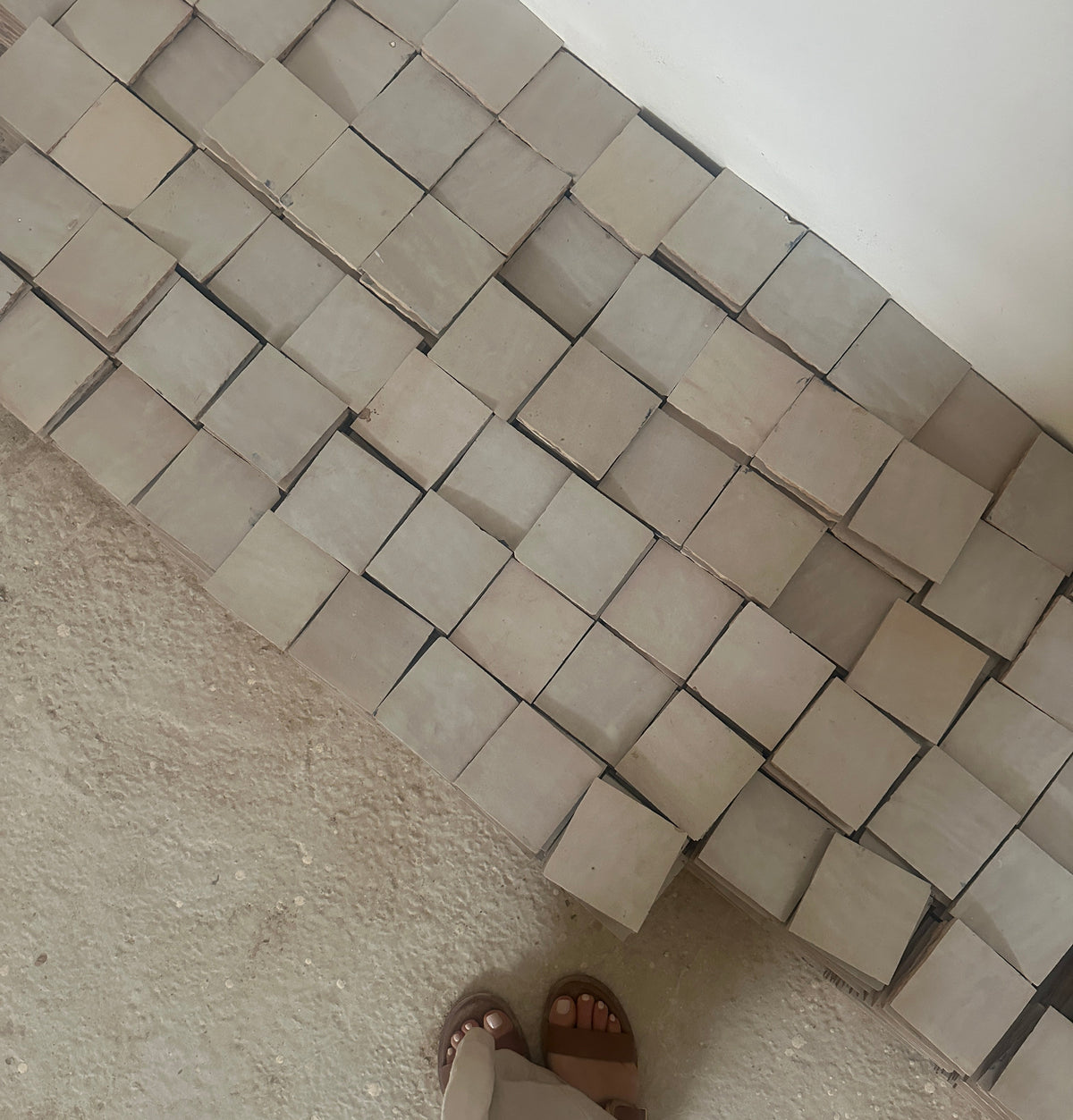
The variation you see in authentic zellige, the depth of glaze and variation, the shifting tone from tile to tile, is not a flaw in the manufacturing process. It is the manufacturing process. It is evidence of the human hand, the kiln, and the clay doing what they have always done.
When a tile is perfectly flat, perfectly uniform, and perfectly consistent from one piece to the next, it is not zellige. It is a photograph of zellige, pressed into ceramic at scale.
How the Word Zellige Is Being Misused
Zellige has no protected designation of origin in most markets. Unlike Champagne, which legally must come from a specific region of France, or Parmigiano-Reggiano, which is protected by European law, the word zellige can be applied to almost anything - and increasingly, it is.
What this means in practice is that a buyer searching for zellige tiles can encounter genuine handmade Moroccan terracotta sitting alongside machine-pressed ceramic tiles from a factory in China or Spain - both listed under the same name, often at similar prices. The difference is not always disclosed. The photography makes it harder to tell. And the buyer, often a designer, architect, or homeowner making a significant investment decision, is left without the information they need.
This is not a minor distinction. Authentic zellige and machine-made imitations are entirely different products. They behave differently on a wall. They age differently over time. They carry entirely different levels of craft, provenance, and value. Calling one by the name of the other is, at best, imprecise. At worst, it is misleading.

What Tiles of Ezra Zellige Is
Our zellige is sourced directly from Fez, Morocco. It is made by hand, glazed by hand, and kiln-fired in the traditional way. Every tile carries the marks of its making.
But sourcing authentic zellige is only part of what we do. The other part is grading it.
Our A Grade Standard, And What It Means
Not all authentic zellige is equal. Even within genuinely handmade Moroccan zellige, quality varies significantly between suppliers. Colour control, consistency of glaze thickness, and the care taken before a tile is packed and shipped differ enormously from one source to the next. We hold ours to a standard that most suppliers do not apply.
Every batch we receive is graded A through D.
A grade tiles are the ones we send to you. Clean glaze, consistent colour control within the natural variation of the material, and edges that reflect the craft without being excessively chipped or irregular beyond what the material calls for.
B, C, and D grade tiles carry lime pops, chips, surface irregularities, or glaze inconsistencies beyond what we consider acceptable for a client installation. We pull every one of them before your order is packed.
They are not wasted. B, C, and D grade tiles can often go directly into our mosaic - where individual pieces are cut small, and any imperfection in the larger tile surface is cut around entirely. The material is honoured. Nothing goes to landfill. And you receive only what meets our standard.
We want to be clear about something: surface variation, shifting tone, and the marks of the kiln are not what we are removing. Those are features of authentic zellige and they are present in every A grade tile we send. What we are removing is the kind of inconsistency - the chips, the lime pops, the glaze failures - that creates frustration on site and unpredictability across an installation.
The result is zellige that still feels entirely handmade, because it is. With the reliability and consistency you need to install it confidently.
WHY AUTHENTIC ZELLIGE CAN ONLY BE MADE IN MOROCCO
How to Know What You Are Buying: A Buyer's Guide
Before purchasing any tile described as zellige, ask these questions:
Where is it made?
Authentic zellige comes from Morocco - specifically from the craft tradition centred in Fez. If a supplier cannot tell you where their zellige is made, that is worth noting.
Is it hand-cut and hand-glazed?
Authentic zellige is hand-cut using a hammer and chisel. The edges will be softly irregular as a result. If the edges are perfectly straight and mechanically clean, it has not been hand-cut.
Is the surface variation real or printed?
Hold the tile at an angle in natural light. Authentic zellige glaze has depth - you can see into it. A printed glaze sits flat on the surface and catches light uniformly. The difference is visible.
Does the supplier grade their tiles?
Most suppliers do not grade their zellige. A supplier who grades - and can tell you what happens to the tiles that don't make the grade - is a supplier who takes quality seriously.
If It's Perfectly Uniform, It Isn't Zellige
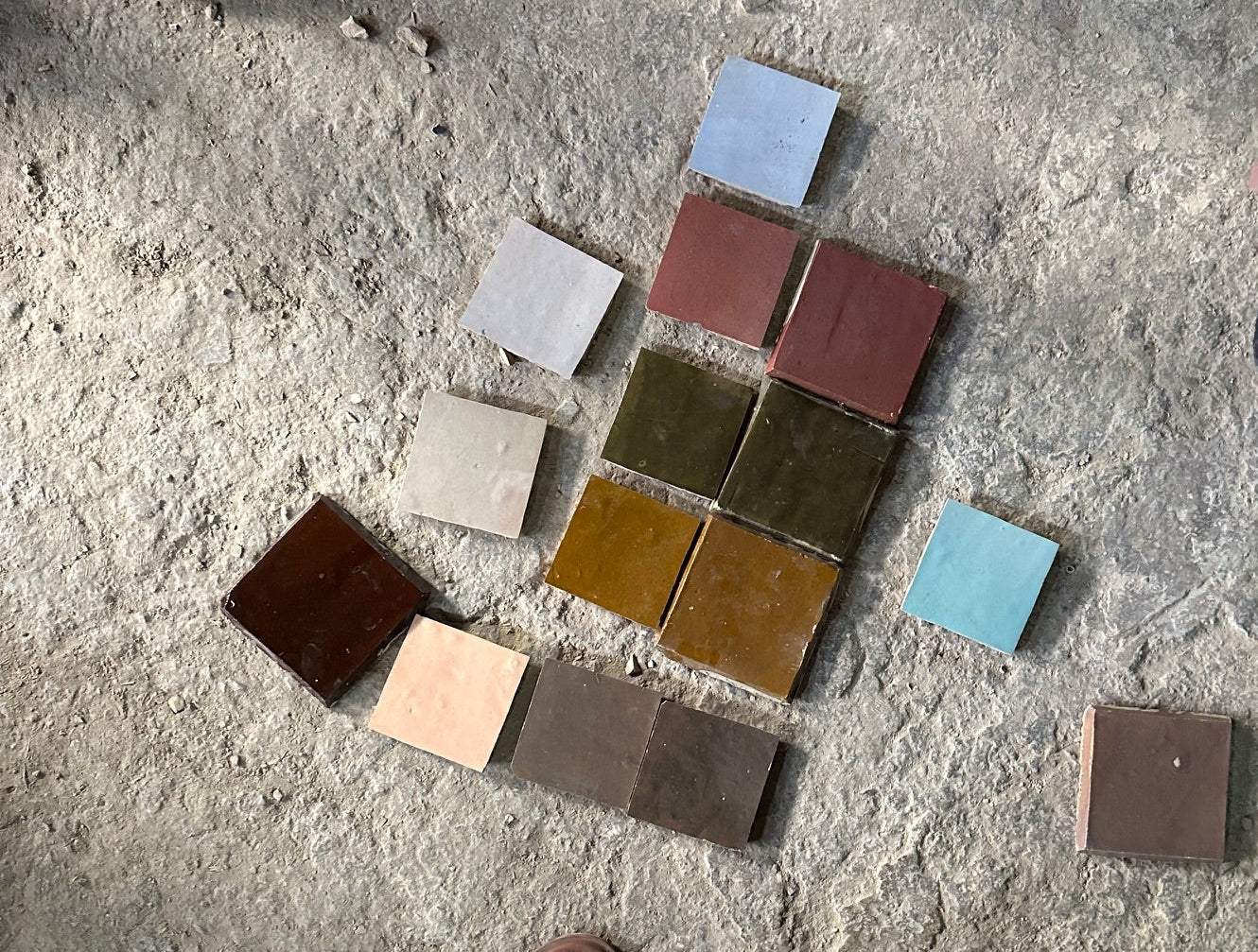
Authentic zellige is alive. It shifts in tone across a wall. It catches light differently from tile to tile. The glaze crazes. The edges are hand-chiselled.
If you are looking at a tile described as zellige and every piece looks identical, or the the edges are uniform and straight, you are most likely looking at an imitation or a Zellige cut by machine not by hand. It may be a beautiful tile. It may even be the right tile for your project. But it is not zellige, and it should not be sold as such.
We built Tiles of Ezra around a commitment to the real thing. That means sourcing from the authentic source, while honouring and sustaining ancient and magnificent craft.
Explore our A grade zellige collection. See the difference for yourself.
Understanding Tiles of Ezra Zellige
Beautiful tiles are everywhere. Standards are not.
To understand exactly how our zellige is made and what the Tiles of Ezra Standard means in practice, read our full guide to Understanding Zellige