

Ondara Glass Mosaic Pool Tile FAQ | Tiles of Ezra
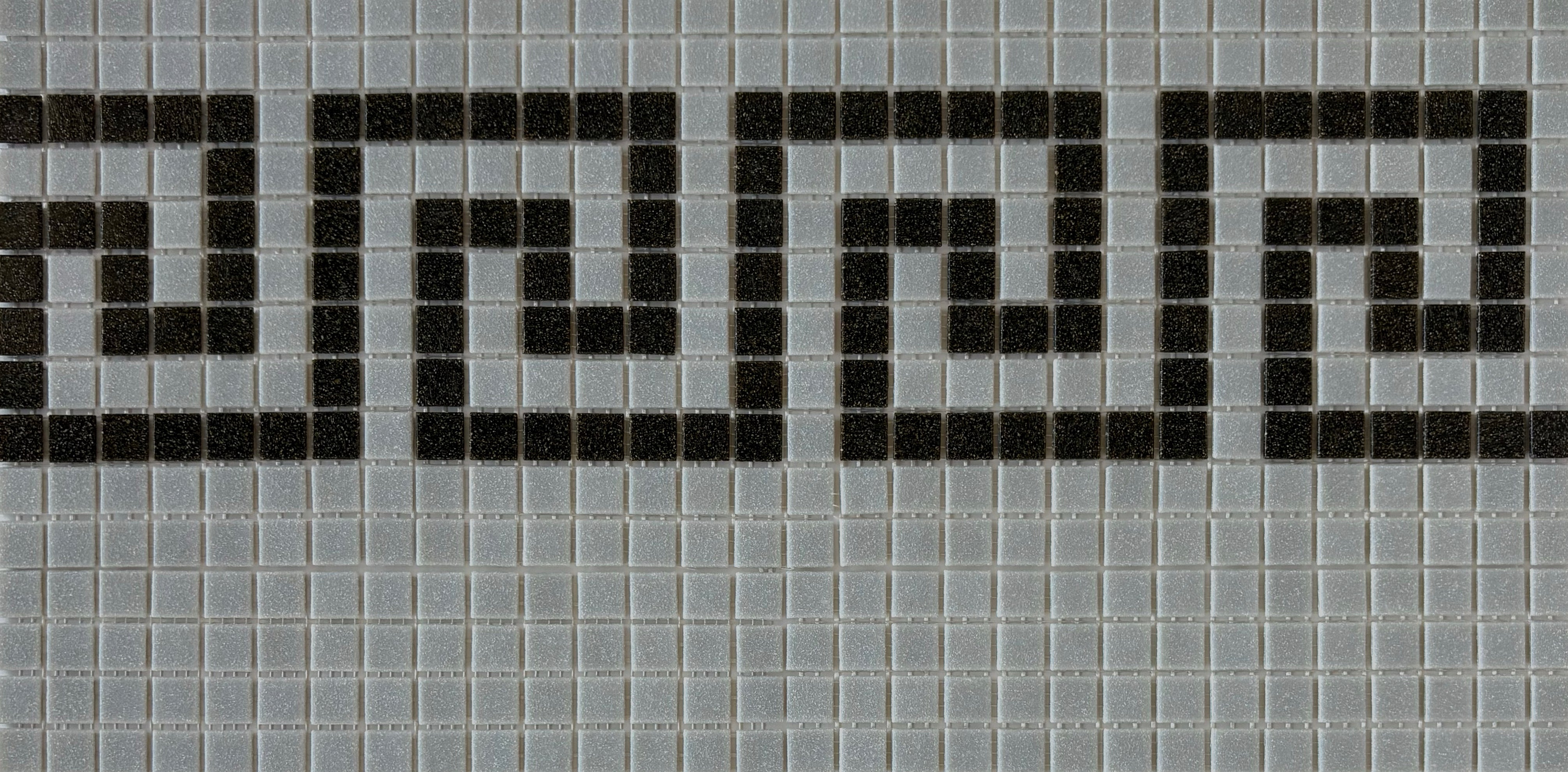
Ondara is Tiles of Ezra's glass mosaic tile collection - a range of glass mosaic pool tiles crafted for pools, spas, and water-exposed spaces, while equally suited to creating striking interior moments. Made from premium melted glass, its composition creates exceptional colour depth, luminosity, and light reflection, allowing surfaces to shift beautifully throughout the day as they interact with water and natural light. Engineered for submerged and wet-area applications, Ondara combines visual impact with durability for residential and commercial spaces alike. Browse the full Ondara glass mosaic collection or see FAQs for our other tile ranges.
The Material
What is Ondara glass mosaic made from?
Ondara glass mosaic tile is made from silica sand, melted at high heat together with soda ash and limestone to form molten glass - the same basic process behind all glass mosaic tile. That molten glass is cooled into flat sheets or small moulds, then cut and shaped into the tiny glass tiles that build each mosaic sheet. The result is a handcrafted-style glass mosaic engineered specifically for pools, spas and other water-exposed environments, with a composition that creates exceptional colour depth, luminosity and light reflection as it interacts with water and natural light throughout the day.
Does Ondara contain the same silica that's flagged as a health risk in stone and ceramic tiles?
No, glass mosaic tile doesn't carry the crystalline silica dust risk associated with cutting stone, concrete or ceramic. It's worth explaining why, since "silica" is a word that understandably raises questions in the tile industry. The silica sand used to make glass is pure silicon dioxide in a solid, stable form, safe to handle as sand. Once it's melted and re-formed into glass, that silica becomes part of a fused, amorphous (non-crystalline) structure, quite different from the crystalline silica found in stone, concrete or fired ceramic.
What the health hazard regulators warn about - the one linked to silicosis and lung disease - is specifically respirable crystalline silica dust: ultra-fine, sharp airborne particles released when cutting or grinding materials like stone, concrete or ceramic tile, which can lodge deep in the lungs with repeated, unprotected exposure. Coarse glass-making sand, and the finished glass itself, don't share that crystalline structure, so they don't carry the same silicosis risk:
- Form and size: glass-making sand is coarse, heavy grains that stay put; the "bad" silica dust is ultra-fine and airborne.
- Health risk: coarse sand is safe to handle and use; it's inhaling fine crystalline silica dust over time that damages lung tissue.
- Reactivity: large grains don't reach the lungs; fine dust bypasses the body's natural filters and lodges in the respiratory system.
That said, we still recommend standard cutting precautions (safety glasses, gloves, and a dust mask, along with a wet saw to keep dust down) as sensible practice when cutting any glass tile, even though it isn't the crystalline-silica hazard associated with cutting stone or ceramic.
Are Ondara glass mosaics mounted on sheets?
Yes, Ondara glass mosaic tile is supplied as paper-faced mounted mosaic sheets, which allows for easier handling, alignment and installation while maintaining flexibility around curves, steps and pool contours.
Why is Ondara mounted on paper and not mesh backing or glue dots?
Paper-face mounting gives a direct, face-to-back bond between the glass tile and the adhesive, with nothing sitting in between - which is why it's the industry-preferred mounting method for premium glass mosaic tile. With the paper on the face of the tile rather than the back, each chip sticks straight onto the thinset adhesive, giving installers close to 100% mortar coverage across the back of every chip - a stronger, more reliable bond than mesh-backed sheets can offer, and especially important in a wet or submerged pool application where the bond is under constant load.
Mesh-backed and glue-dot systems work the opposite way: the mesh, or the glue dot system, sits physically between the tile and the mortar, acting as a bond breaker rather than a bond aid. In a pool environment, mesh brings a second downside too - it gives moisture a place to sit behind the tile, which can promote bacteria growth over time. Paper-face mounting removes that layer entirely.
There's a practical installation benefit as well: because the paper holds the sheet together on the face rather than the back, installers can nudge and true up individual tiles while the mortar is still workable - rather than the day after - which avoids the visible "sheet lines" mesh-backed mosaics can leave, and makes it far easier to wrap tiles around curves, steps and radius edges. It also allows the mortar bed to cure and shrink evenly across the whole sheet, rather than unevenly around a mesh grid. This approach follows the Tile Council of North America (TCNA) Handbook and ANSI A108.16, the industry standard for glass mosaic tile installation.
Colours and Variation
How many colours does Ondara glass mosaic come in?
Ondara comes in 40 named colours ranging from soft neutrals to rich jewel tones. Browse the full colour range in the Ondara collection.
Are Ondara tiles UV-resistant and colour-fast?
Yes, Ondara's colours won't fade or degrade with sun exposure over time. Glass mosaic tile offers excellent UV stability and colour fastness as a material, making Ondara well suited to both indoor and outdoor pools, as well as sun-exposed feature walls.
Does colour vary between chips, sheets or orders?
Very little, glass mosaic tile is naturally more colour-consistent than handmade ceramic or stone, since it's manufactured from melted glass rather than fired clay. That said, as with any coloured material, very slight variation between production batches is still possible. For larger installations, we recommend ordering enough from the same batch to complete your project in one run.
Sizing
What sizes does Ondara glass mosaic come in?
Ondara is supplied as 20mm x 20mm (0.79" x 0.79") glass chips, mounted on paper-faced sheets in three sizes - 327mm x 327mm (12.87" x 12.87"), 305mm x 305mm (12" x 12"), and 175mm x 241mm (6.89" x 9.49") - at a consistent 4mm (0.16") thickness across all formats. Full technical details are in the Ondara specification sheet.
Installation
Who should install Ondara glass mosaic tile?
A certified pool professional or experienced glass mosaic tiler - we don't recommend a DIY installation. Given how technical a pool-rated glass mosaic installation is -waterproofing, submersion-rated adhesives and grouts, movement joints, and paper-face removal all need to be right - we strongly recommend engaging an installer with specific glass mosaic and pool experience. As with all our ranges, final product selection, blending, adhesive/grout choice and installation method are the responsibility of your professional installer, and Tiles of Ezra is not able to take responsibility for outcomes arising from installation error. See our installation guides and resources for more detail.
Do these glass mosaic tiles require a specific adhesive or installation system?
Yes - Ondara must be installed using adhesives, grouts and installation products specifically suitable for glass mosaic tile and appropriate for the intended application. Due to the translucent nature of glass, a white or neutral-coloured adhesive is recommended, particularly for lighter colourways, as the colour and consistency of the adhesive bed may be visible through the tile.
For pools, spas and other submerged applications, all adhesives, grouts and waterproofing systems must also be specifically rated for continuous water immersion and the relevant chemical environment.
We strongly recommend installation by an experienced tiler familiar with glass mosaics, as correct product selection, adhesive coverage, substrate preparation and cure times are important to the finished result.
What substrate preparation and waterproofing does a pool installation need?
The substrate needs to be sound, clean and below 3% moisture content, with a pool-rated waterproofing membrane and correctly placed movement joints. More specifically: the substrate - typically concrete or render - should be smooth, flat, and free of dust, oil, grease or other contaminants before tiling begins. A waterproofing and/or anti-fracture membrane suited to submerged applications is essential, along with movement/expansion joints at key points - between the tile and coping or decking, at inside corners, over any joints in the pool shell, and anywhere the substrate material changes - sealed with a flexible, pool-rated silicone sealant rather than grout.
Once tiling is complete, allow around 24 hours' cure before the first clean-down with post-construction cleaning products; this is separate from the longer cure period needed before the pool itself can be filled (see below).
How do you remove the paper facing mount?
- Allow mortar to firm up (typically 20–40 minutes, depending on conditions)
- Wet paper thoroughly with clean water
- Gently peel paper from the surface
- Do not remove paper too early or too late
- Remove all paper adhesive residue from tile surfaces and joints, using clean water, a sponge and a soft nylon brush if required
- Joints must be fully open and free of residue before grouting
How should sheets be laid out and spaced?
Install sheets paper-side out, with the joint between adjacent sheets kept slightly wider than the joints between individual chips within a sheet. Press each sheet firmly with a rubber float to ensure full, even contact with the adhesive bed. The slightly wider sheet-to-sheet joint means the pattern reads as continuous once grouted, rather than showing a visible grid of sheet lines.
What grout type and colour is recommended for glass mosaic tile in pools?
Grout should be specifically suitable for glass mosaic tile and appropriate for the intended application. For pools, spas and other submerged environments, we recommend a high-quality epoxy grout specifically rated for continuous water immersion, as it offers excellent resistance to water, pool chemicals and staining.
Grout colour is ultimately a design choice; however, lighter or tonal grout colours are generally recommended, particularly with lighter or more translucent Ondara colourways. As with the adhesive used behind the tile, surrounding colours can influence the appearance of translucent glass, so a lighter, neutral grout will typically provide the most consistent representation of the tile's intended colour and clarity.
Always confirm that the selected grout is compatible with glass mosaic tile and suitable for the specific installation environment.
Can Ondara tiles be cut easily?
Yes, with a wet saw fitted with a blade suitable for glass tile. Cutting should be carried out carefully, ideally in a few light passes rather than one heavy cut, to avoid chipping - the paper facing itself can simply be cut with scissors. Cutting should be carried out by an installer experienced with glass mosaics.
Performance & Durability
Are the mosaics suitable for full pool interiors as well as waterlines?
Yes - Ondara suits full pool interiors, waterlines, steps, ledges and feature areas. As with any pool application, this depends on installing with a pool-rated system and in line with industry best practice.
Are Ondara tiles suitable for saltwater and chlorinated pools?
Yes - glass mosaic tile is highly resistant to chemicals, making Ondara suitable for both saltwater and chlorinated pools when installed with compatible adhesives, grouts and waterproofing systems.
Is Ondara suitable outside the pool, for feature walls, fireplaces or splashbacks?
Yes, Ondara works equally well as an interior glass mosaic tile. Beyond pools and spas, it suits interior and exterior walls and floors, kitchen and bathroom splashbacks, shower walls, benchtops, fireplace surrounds, fountains, and wrapping around basins and sinks - it's rated both UV and heat resistant, which supports this range of uses. See the full Ondara collection for interior and pool applications side by side.
Do Ondara tiles require sealing?
No, glass mosaic tile is non-porous and doesn't require sealing. Grout lines may still benefit from sealing depending on the grout type used and your installer's recommendation.
Do the tiles have a slip rating for submerged steps or ledges?
Not in the way dry flooring is rated - slip resistance in submerged environments depends more on water presence and pool design than a standard slip rating. Ondara is designed for underwater use, so for steps, ledges or shallow areas, ask your pool designer or installer to assess suitability against local regulations and your project requirements.
How do I clean and maintain Ondara glass mosaic tiles?
Maintenance is straightforward:
- Clean regularly using non-abrasive, pH-neutral cleaners suitable for pool environments.
- Avoid harsh abrasives that could scratch the glass surface.
- Maintain correct pool water chemistry to prevent scale or residue build-up.
With proper pool maintenance, Ondara tiles will retain their clarity and colour over time.
Ordering & Samples
Do you offer samples for the Ondara range?
Yes - Tiles of Ezra offers sample tiles for most Ondara glass mosaic colours and finishes so you can see how the colour, tone and texture look in your own space before committing to full-size orders. Request samples directly here.
Explore more: Ondara glass mosaic collection · Ondara specification sheet · Installation guides & resources · FAQs for other tile ranges
Still Have Questions?
We’re here to help you navigate the details. Whether you’re exploring our ranges, comparing finishes, or seeking guidance on which tile best suits your space, our team is here to share the knowledge and confidence you need to decide.